 Web Hosting
 Windows HostingBuilt for Windows apps and websites – stability, speed and flexibility
 Reseller HostingLaunch a hosting business without technical skills or expensive infrastructure
 Affiliate ProgramRefer customers and earn commissions from sales across our platform
 Domain SearchFind and secure a domain name in seconds with our quick lookup tool
 CO ZA Domains
 All DomainsExplore domain names from over 324 TLDs globally – all in one place
 Free Whois Lookup Tool South Africa
 VPS
VPS Website Builder
 Online ShopSet up a sleek eCommerce store with zero coding knowledge
 SSLs
SSLs SupportAccess help articles, how-tos, and everything about our services
 Blog
Blog Contact UsReach our team instantly via live chat or drop us an email
You finished the job. The client said they were happy. You sent the bill and then they go silent.
A week passes. You send a polite follow-up. Another week passes. You send a less polite one. By week three, you’re wondering whether the client ever actually intends to pay at all.
This is one of the most common frustrations for freelancers, contractors, and small business owners across South Africa. And in most cases, the root of the problem isn’t a difficult client. It’s an invoice that gives that client a quiet excuse to delay. Explore this invoice templates for small business
Professional invoice templates for small business owners solve more than a formatting problem. They signal that you’re organised, serious, and the kind of business that notices when a payment is late. Clients who sense that tend to pay considerably faster than those who sense the opposite.

This guide walks you through exactly what a strong South African invoice needs, what’s silently costing you money right now, and how to set up a billing identity that gets your bank account moving faster.

Table of Contents
The Essential of a South African Invoice
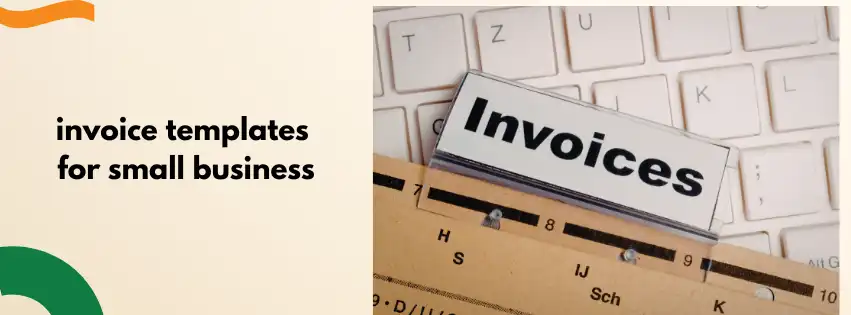
Before you can send anything, you need to know what every invoice in South Africa should include. Leaving out a single required field gives a client’s accounting department a legitimate reason to pause the payment, request a corrected document, and push your due date back by another two weeks.
Here’s what every invoice needs, explained in plain terms.
“Tax Invoice” or “Invoice”: Which One to Use
If you are registered for VAT with SARS and you charge VAT to your clients, your document must say “Tax Invoice” at the top, not just “Invoice.” This is a legal requirement for VAT vendors.
If you are not VAT registered, which applies to most small businesses earning below the R1 million threshold, you simply use “Invoice.” Using “Tax Invoice” when you’re not registered creates a compliance problem for your client and will get your document sent straight back to you.
Sequential Invoice Numbers
Every invoice you send needs a unique reference number, and those numbers should follow a logical order. A format like INV-2026-001, INV-2026-002 and so on makes it simple to track outstanding payments, reference a specific document in a client conversation, and keep your records clean at tax time.
Random or repeated invoice numbers are a small but visible sign of disorganisation. Professional billing tools sa businesses use consistently prevent this problem before it starts.
Clear Dates: Invoice Date and Payment Due Date
Your invoice must show two dates. The first is the date you issued the invoice. The second is the specific date by which payment is due.
“Due within 7 days” is better than no due date at all, but “Payment due by 15 July 2026” is clearer still. A precise calendar date leaves no room for a client to claim they weren’t sure when the deadline fell.
Your Details and Your Client’s Details

Your invoice needs to show your full trading name or legal business name, your physical or postal address, and a working contact number. Below that, it needs the full name of the client entity you’re billing, not just a person’s name, and their address if you have it.
If your client is a company, they need those details to process the invoice through their own accounting system. Missing them is one of the fastest ways to end up in the “pending” pile while someone hunts down the information manually.
A Clear Service Breakdown
This is where most small invoices fall apart. A line that reads “Services rendered: R5,000” tells an accounts clerk almost nothing. They’ll send it back, ask for clarity, and your payment clock resets.
A line that reads “Electrical maintenance at Vereeniging warehouse site, 12 June 2026: 8 hours at R450/hour = R3,600” tells them exactly what they’re paying for, who authorised it, and where it fits into their project records. That invoice moves through the system without a single question.
Your Banking Details
Make it effortless for your client to pay you. Include your bank name, account number, account type, and branch code directly on the invoice. Some business owners also include their company name exactly as it appears on their bank account, which helps clients confirm the EFT details are correct before they process the payment.
Three Invoicing Mistakes That Are Quietly Freezing Your Cash Flow
Most delayed payments trace back to one of these three problems. The good news is that every single one of them is easy to fix once you spot it.
Mistake 1: Descriptions That Are Too Vague
“Work completed” is the single most payment-delaying phrase in a South African invoice. It gives the client no way to match your charge to a job, a purchase order, or an approved quote.
A tiler in Centurion sent an invoice for “tiling work” to a property developer last year and waited six weeks for payment. When he finally followed up with a detailed breakdown of the job, the area, and the materials used, the payment cleared within four days. The work itself had never been in question. The description had just given the finance department an easy reason to push it to the back of the queue.
Describe every line item as if the person reading it was never at the job site and has never spoken to you directly. Because in most companies, the person who pays invoices is exactly that person.
Mistake 2: No Specific Due Date
When there’s no payment deadline on an invoice, the client quietly applies their own, usually 30 to 60 days, which was never the agreement you made with the person who hired you.
Always state your payment terms clearly on every invoice, and keep them consistent. If your standard terms are seven days from invoice date, print that on every document you send without exception. It sets a professional expectation from the moment the invoice lands, and it gives you a specific date to reference if you need to follow up.
Mistake 3: The Gmail Red Flag
This is the mistake that costs small businesses the most money, and it’s also the most invisible one.

A beautifully designed PDF invoice sent from [email protected] or [email protected] immediately signals to a corporate accounts department that this is a very small operation. Small operations, fairly or unfairly, are assumed to be less likely to chase an overdue payment firmly.
An invoice that arrives from [email protected] or [email protected] signals something completely different. It reads like a business with proper systems, a team, and a process for following up on outstanding amounts.
The invoice content might be identical. The email address it comes from quietly changes how quickly the client decides to act on it.
Building a Billing Identity That Clients Take Seriously
A professional email address is the fastest single upgrade any small business owner can make to their billing process. It costs almost nothing and changes how clients treat your invoices from the first one you send.
Truehost Workplace email hosting starts from R8 per month on an annual plan for the Starter package. That’s less than the price of a single loaf of bread each month.
For that monthly amount, you get a secure business email address that matches your domain name, the kind that [email protected] delivers on, along with cloud storage to keep your quotes, invoices, and client contracts organised and accessible from your phone, laptop, or tablet wherever you are.
A garden services owner in Port Shepstone switched from a personal Gmail account to a Workplace email and domain combo last year. She told us that two long-standing commercial clients who had previously paid on 45-day cycles started settling within ten days of the switch, without her chasing them once. Nothing else changed about her invoicing process. Just the email address it came from.
A Simple Invoice Template You Can Use Today
Here’s a clean, straightforward layout you can copy into Word, Google Docs, or a Canva template right now:
[Your Business Name] [Trading address] | [Phone number] | [email protected]
INVOICE Invoice No: INV-2026-001 Invoice Date: [Date] Payment Due: [Specific date, e.g. 10 July 2026]
Billed To: [Client company name] [Client address]
| Description | Qty | Rate | Total |
|---|---|---|---|
| [Clear description of service, date, and location] | 1 | R [amount] | R [amount] |
| [Second line item if applicable] | R [amount] | ||
| SUBTOTAL | R [amount] | ||
| VAT (15%) if applicable | R [amount] | ||
| TOTAL DUE | R [amount] |
Banking Details: Bank: [Bank name] Account Name: [Exact name on account] Account No: [Number] Account Type: [Cheque/Current/Savings] Branch Code: [Code]
Payment terms: Due by [specific date]. Queries: [email protected]
Save this template directly in your Truehost Workplace cloud storage so you can pull it up from any device and fill it in the moment a client asks for a quote. A quote that arrives within an hour of a client’s request is far more likely to convert into a job than one that arrives three days later from a personal inbox.
Quick Questions About Invoicing in South Africa
Do I need to charge VAT if I’m a small business?
Only if you are VAT registered with SARS, which generally applies once your business earns more than R1 million per year. Below that threshold, you do not charge or collect VAT, and your document should say “Invoice,” not “Tax Invoice.”
How long should I give clients to pay?
Seven to fourteen days is standard for small service businesses. Larger companies often request 30 days as part of their internal processes. State your terms clearly on every invoice and discuss them with the client before you start the job, so there’s no disagreement when the invoice arrives.
Do I need to charge VAT if I’m a small business?
end a formal overdue notice from your business email address quoting the invoice number and the specific due date that has passed. A professional, documented trail from a branded business address carries far more weight than a WhatsApp follow-up if you eventually need to escalate
end a formal overdue notice from your business email address quoting the invoice number and the specific due date that has passed. A professional, documented trail from a branded business address carries far more weight than a WhatsApp follow-up if you eventually need to escalate the matter.
Your Invoice Is a Reflection of Your Business
A well-structured invoice that arrives from a professional email address, with clear line items and a specific due date, does something beyond just requesting payment. It tells a client that you’re a real business with proper systems, and that late payment is something you notice and follow up on.
That perception alone is worth more than any invoice template on its own.
Stop letting a personal email address and a vague document slow your cash flow down. Set up your Truehost Workplace email at R8 a month, pair it with the invoice template above, and give every client you bill from this week a clear, professional reason to pay you on time.